Since 1999

Khurshid Anwar
Everything about the uniquely talented music director of the Indian subcontinent.
- Details
Note: The following was published on sadarang.com, now defunct.
I have tried to resurrect it from the Internet Archives.

Yaadein: The Kashmiri Mehfil by M A Sheikh
Introduction
A nonagenarian, aesthete and scholar of high repute, M.A.Sheikh has been associated with the musical circles of Lahore for almost 70 years and has seen profound changes taking place to classical music. Yadein or Memories is a reflection of M.A. Sheikh's memorable moments in classical music. The opening article in this series concerns a tour to Srinagar in 1935 by seasoned artistes Ustad Chotay Ghulam Ali Khan and Ustad Jamal Khan.
The Article
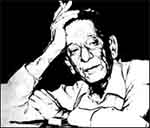
During the summer months of 1935, the late Syed Shabbir Hussain Shah, husband of Malika Pukhraj, organised a pleasure trip to Kashmir. The group mainly consisted of connoisseurs and musicians and included Khwaja Khurshid Anwar (music director), Khawaja Mohammad Masood (associated with the Punjab Assembly), Colonel (Rtd) Dr. K.A. Rasheed (Director of Dial Singh library), Pir Salahuddin of Bahawalpur, Sheikh Ahmed Hussain (Gujrat), Mumtaz sahab (Islamia College Lahore) and this scribe. Amongst the musicians were renowned vocalists Ustad Chotay Ghulam Ali Khan, and Ustad Jamal Khan, more popularly known as Macchar Khan, and tabla player Manzoor Hussain Khan of Qasur.
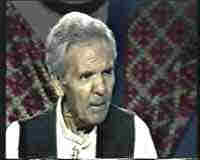
Ustad Chotay Ghulam Ali Khan belonged to the Qawwal Bachha gharana and had achieved fame in the subcontinent for his khayal performances, his extraordinary ability to execute difficult taans won him praise from listeners. Ustad Jamal Khan, a member of the Gwalior gharana was another musical giant and an uncle of the famous vocalist Ustad Umeed Ali Khan.
We all left from Lahore and reached Srinagar in two days. The entire group was accommodated in two house boats stationed at Dal Lake, Srinagar, one of which was occupied by the two vocalists and instrumentalist. Kashmir resembled paradise on earth, the lush green lawns of the surroundings dotted with tall pine trees and the leaves emitting flavoured aroma was both exciting and refreshing. In this pleasant and informal atmosphere, Ustad Chotay Ghulam Ali Khan and Ustad Jamal Khan with Manzoor Hussain accompanying on the tabla would daily sit face to face each morning and later in the evening surrounded by us and sing for two hours. Their exciting renditions would thrill us all and attract the tourists staying in neighboring house boats who would often gather near our house boat when the lingering melodies and thundering musical phraseology reached their ears.
During each performance, both vocalists focused on difficult taan patterns and would try to outdo each other, each recital resembled a battle between two gladiators fighting to win at all odds. The style of both stalwarts was open throated, each taan was perfectly executed, there wasn’t much exhibition of tihaees although layakari of both was clearly evident to all. They often sang raags Bhairon, Lalit, Todi, Alhaiya Bilawal, Jaijaiwanti, Multani, Marwa, and Puriya.
The performances continued for about a fortnight and the matter came to a head when an emissary of the Maharaja of Kashmir dropped in with a message asking the group along with singers to present themselves at the state guest house on the given date. Khawaja Khurshid Anwar politely refused this proposal by explaining that the group was going to Gulmerg according to a pre-planned schedule, and that they would comply with the request on return. We soon set off for Gulmerg, a summer resort favored by the officers of the British Raj, and were astonished to see the tourists we had met in Srinagar had reached Gulmerg before us in anticipation to hear more music. We stayed at Gulmerg for about a fortnight before returning to Srinagar and immediately romped off home to avoid a call from the state Durbar.
Memories of this trip lingered on for a number of years and each time the recollections provided immense pleasure and extra joy. One important result of this trip was the discovery of Ustad Jamal Khan as a vocalist of great merit. From then on he became a regular visitor to Syed Shabbir Hussain Shah's baithak which was frequented by great artistes such as Ustad Ashiq Ali Khan, Ustad Akhtar Hussain Khan, Baba Buday Khan Qasuri, Feroz Nizami, Ustad Tawakkal Hussain Khan and Ustad Sohni Khan.
- Details
CHINGARI An artist's comment on society
Reviewed by I. A. REHMAN
CREDITS: Banner: Z. A. Productions. Producers: Mian Zahoor, Bashir Asghar and Kh. Khurshid Anwar. Director: Kh. Khurshid Anwar. Story and Screenplay: Kh. Khurshid Anwar. Music: Kh. Khurshid Anwar. Songs: Qateel Shifai, Tanvir Naqvi and Faiz Ahmad Faiz. Photography: Azhar Burki. Audiography: S. Afzal Husain. Cast: Shamim Ara, Santosh, Deeba, Ejaz, Talish, Komal, Nighat Sultana, Khurshid Shahid and Jafari. Released in October 1964
The release of a Khurshid Anwar film is always a major event on our film calendar: that of his latest film, Chingari, bids fair to become a memorable one also. Chingari has all the qualities in greater measure of its predecessors: a musical score of rare virtuosity, mature craftsmanship, and a high standard of artistic integrity. What makes it stand out still higher is the significance of the theme for it touches upon an issue of life as important as any other, and compels the audience to reflect as to what kind of society they might become if they did not find their cultural bearings. The theme poses a challenge only a cultured mind and (in the present setup a filmmaker of some courage) would dare to meet. And not only Khurshid Anwar but the whole national cinema has reason to feel proud of the result achieved.
Like Fellini, Khurshid Anwar is deeply provoked by the corrosion of social, cultural and moral values in his society. But unlike the celebrated Italian he neither assumes the role of a detached observer nor succumbs to morbid despair. While warning the society against dangers ahead, he does not find to offer a more satisfying alternative. There has been some slogan mongering on the subject on both sides of the Indo-Pakistan border but Chingari must rank as the first positive, cogent attempt to analyse the problem and tackle it in a sound and rational manner.
The film is aptly subtitled the story of a smouldering society. The source of mischief is identified, through a beautifully assembled title montage, as the unobstructed cxposure of the youth to western sex literature alien music strip tease entertainment and the cult of exhibitionism.
A graphic presentation of the consequences of surrender to this cultural invasion forms the substance of the story. Two women, a young girl and her step-mother, are caught in the whirlpool of drink parties, twist dancing, and frivolous living. One vice attracts another and life is corrupted to the core. A virgin compromises her virtue and a husband is driven to crime by faithless wife. By the time, the characters concerned awaken to the ugly realities of their situation ghastly tragedy has engulfed hot only the guilty but also the innocent ones associated with them.
In contrast, there is another set of people equally educated and prosperous who continue to enjoy the blessing of tranquillity by pursuing their native cultural traditions. It is most significant that the writer does not cast his good set as a group of unenlightened obscurantists who blindly shun modernism. They are the people who have evolved a synthesis of the modern and traditional, who candistinguish love from lust and the joys of youth from a licence for waywardness.
The medium selected for bringing out the contrast between the two sets of values is music. It is an appropriate selection, for music is capable of making the required comparison and it is used by a man eminently qualified for the job. Khurshid Anwar has no hesitation in characterising alien music as a harbinger of cultural anarchy and pernicious influences, nor has he any difficulty in demonstrating the edifying and soothing effects of our own musical tradition. And while projecting the comparison he enlarges the scope of argument to include the criterion of artistic evaluation as well as the responsibility of the genuine artist. If the rejection of the concept of art as something divorced from the purpose of living is implied, the criticism of artists who turn away from contemporary life and peoplc's native tradition is pointed and explicit.
It is possible that some people will disagree with the thesis presented here in total or in part. But that is immaterial because this is the case of an artist putting forth his point of view and his convictions. The fact that matters is that Khurshid Anwar has blended image and sound to advance his arguments most effectively. This is film direction in the true sense of the word. He treats the allegory like story with remarkable singlemindedness. There is no, superfluous incident, no melodramatic digression (such as a less uncompromising artist might attempt when a girl beseaches the man she loves to marry her sister), no forced relief; and no concessions to the vulgar; His sole interest is to show, quite unobtrusively, the revolting nature of things he wants people to despise and the beauty of things they should appreciate. His montages are exceptionally effective especially where a twist dance is inter-cut with the wild frenzy of a mob incited to murder. All along, sound supplements the effect of the image and helps in recognising the character's motives. Whenever an evil thought crosses the misguided girl's mind, a shrill jazz tune is played on the soundtrack and every moment of tender love is illustrated with soulraising melody. The artistes play their assigned roles most convincingly. Deeba soars to stardom with a performance which is without blemish. She carries the major burden of the story with the assurance of a confident artist. Shamim Ara and Santosh display dignified restraint and Talish and Nighat do their bit adequately. Even Ejaz and Komal respond to their roles enthusiastically.
The music, as said earlier, reveals the wide range of the composer's genius. Less than that it could not have served the purpose of the story. It will be unfair to treat it separately but those who must do so should not fail to appreciate the haunting melodies exquisitely scored and rendered with feeling by Noor Jehan and Mehdi Hasan. The lyricists also get into the mood and find words to complement the effect of visuals and music. The film's technical values are excellent, the photography in particular.
- Details
INTEZAR A successful experiment
Reviewd By l. A.REHMAN
CREDITS: Banner: Select Pictures. Producers: Kh. Khurshid Anwar and Sultan Jilani. Director: Masud Pervez. Story and Screenplay: Kh. Khurshid Anwar. Music: Kh. Khurshid Anwar. Songs: Qateel Shifiai Tufail Hoshiarpuri. Dialogues: S. Imtiaz Ali Taj. Photography: Nabi Abmad. Audiography: Taj Malik and S. Jilani. Cast: Noor Jehan, Santosh, Asha Posley, Ghulam Mohammad, Ashiq Husain and Majeed.
Released in May 1956
Select Pictures' 'Intezar', marks a welcome departure from the usual film themes and modes of treatment. It is a successful experiment. Leaving aside the unnecessary elements of box-office stories and cutting down all superfluous matter; the scenarist has created a drama with real characters from life. He keeps the audience engrossed not by any extraordinary event but by clever handling of the theme.
For most of our people music means only film music, and that too of the cheapest variety. No one can deny that the IndoPakistan film music has been developed almost wholly on considerations of cheap popularity and monetary gains and has hardly anything in common with the art and traditions of the people. The original music of the people seems to have been forgotten and is in danger of extinction unless something is done to revive it through the mere available medium of films. Every effort towards the purification of film music must, therefore, be welcomed and encouraged by all. Select Pictures' 'Intezar' marks the first bold step in this direction. Khurshid Anwar's musical score, based purely on classical `ragas', alone makes it an outstanding film.
'Intezar' is an undisguised attack on cheap westernised music that one often hears on the screen. At the same time it reveals the finest quality of our own national music. The film starts from the premise that music cannot be considered in isolation from the life of the people. It is an inseparable part of culture and should be taken in its proper context. The argument is built up by contrast on a wide scale. The common and unintelligent mixture of the foreign and the national, and the pure national music are represented by characters. Practically every player is in either of the two camps. The highest grade of contrast is presented by two young brothers. Salim is modest, sincere and considerate, a man of upright character and a lover of `ragas'. Naim is just the opposite. He is violent, unbalanced, very fond of sambas and rumbas and devoid of morality. In Salim's life everything is adjusted in a smooth, rhythmic pattern, while Naim's existence has a distorted and out-of-place look. Both of them love a simple daughter of the soil who, in view of her training in music, can be described as representing the views of the discerning public. Her choice is the choice of the people. She has reasons, some sentimental, others very academic, for liking Salim. His music, she says, works for the purification and propei growth of the human spirit while Naim perverts and degrades it. The former is in keeping with the social conditions and sentiments of the people, their tradition and culture, in fact with the mood of the land itself; the latter is utterly foreign to them. Both schools of music and music-lovers have ample opportunity for showing their art. Naim has a very resolute composer and conductor in Master D'Souza, who tries his best to implant foreign music in a land which already has fine music of its own. The national art has its exponents in Nimmi, the blind girl from the beautiful valley, her father, and Salim himself. The position is so clear that the audience has no difficulty in following the contrast and their verdict is not going to be any different from that of Nimmi's; The success of 'Infezar's' music shows that our classical and folk music is not something to be confined to the assemblies of experts but can, if properly presented, hold its supremacy anywhere, in private gatherings of aestheticians or on the screen and the stage. The musical score of `Intezar', rich, melodious and instantly appealing, is the chief highlight of the film. It marks a departure that other composers would do well to note.
The novel theme makes an interesting film. Told in cold print, the story may not appear particularly impressive. It has no sensational turns and twists, none of the common ingredients that are generally considered indispensable to a successful film. But `Intezar' is nevertheless successful. Told in celluloid, its story never flags in interest and occasionally thrills. While the first half is steeped in sentiment, the second abounds with much gripping melodrama and an intense piecemeal analysis of characters. In fact, it is the clash of characters rather than action which sustains interest in the story. The screen-play is well-conceived and the director deserves praise for extracting the last ounce of interest and emotion out of it. The way he build up a climax with the help of a song a rare, immensely thrilling experience. `Intezar' is an artistic example of how a successful film can be created without resort to the conventional stock-in-trade of the screen writers. The absolute lack of cheapness and vulgarity, which are commonly supposed to be necessary for the success of a film, is another noteworthy feature of `Intezar'. Its comedy is clean and witty, with a rich streak of satire
Masud Parvez has directed the cast efficiently. `Intezar', it must be said, is a competently acted film, Noor Jehan has the innocent charm and dignity of the mountain belle. She has played the role of a blind girl with understanding and concentration and has been beautifully photographed throughout. Santosh Kumar keeps the persons of Salim and Naim distinctly individual. From moral and mental attitudes to physical characteristics they look two different men. That is a tribute to the histrionic ability of Santosh. The two main stars get good support from almost all the supporting cast, but the most surprisingly competent portrayal in a side role comes from Ashiq Hussain. His is a first class villain. With well-controlled and suggestive gestures he builds up the character of the avaricious hypocrite.
The film's photography and sound are good. For a newcomer, Nabi Ahmad's work behind the camera is commendable. Some of the outdoor shots are especially worth mentioning.
Subcategories
Khurshid Anwar Main Page Article Count: 2
Khurshid Anwar Main Page
Page 3 of 7
